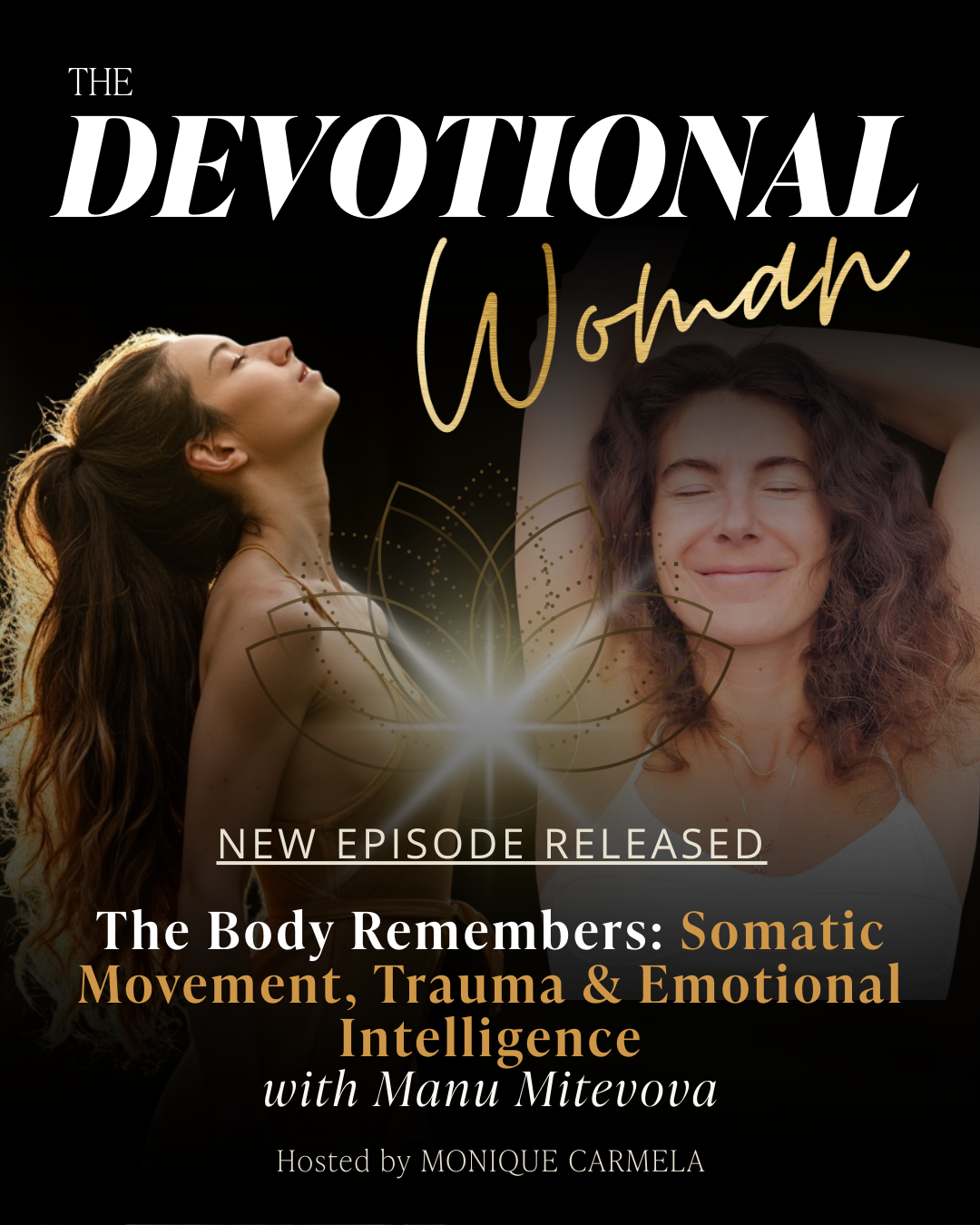
Somatic Movement: How to Release Emotions and Trauma Stored in the Body

There’s a reason you can understand your patterns… and still feel stuck inside them.
You can know why you react the way you do.
You can see your triggers coming.
You can intellectualise your healing — and still find your body bracing, collapsing, shutting down, or flooding with emotion.
Because trauma isn’t only a story in the mind.
For many of us, trauma lives as a physical imprint in the body — in posture, tension, breath, and the places we tighten without even realising.
And this is where somatic movement becomes a missing piece.
What is somatic movement?
“Somatic” doesn’t simply mean “body-based.”
Somatic work is an inside experience.
It’s not about how your movement looks — it’s about what you notice and feel from within.
Somatic movement is a compassionate and curious inquiry:
What am I feeling in my body right now?
Where do I brace?
What happens if I soften 5%?
Can I meet this sensation without judging it?
It’s less “workout” and more self-care.
More spa than performance.
More slow and safe than hard and fast.
How trauma lives in the body
Trauma can include big events (accidents, abuse, loss) — but it’s also true that many of us carry smaller, repeated experiences that shaped our nervous system over time: being dismissed, shamed, not soothed, feeling unsafe to express emotion, constantly having to “hold it together.”
A helpful reframe is this:
Trauma isn’t only what happened — it’s what happened inside you, and whether you had the resources to meet it.
When something overwhelms your system, the body activates survival responses:
fight
flight
freeze
collapse
Muscles brace. Breath changes. The body prepares to protect you.
And if the stress cycle doesn’t complete — if the body doesn’t get to finish the impulse to run, push away, tremble, cry, or sound — that activation can remain in the tissues.
This is why you may notice:
tight hips
clenched jaw
shoulders hunched forward
shallow breathing
chronic tension or fatigue
feeling “stuck” in anxiety or shutdown
Big T vs little t trauma
A lot of people avoid the word trauma because they associate it with extreme events.
But trauma is a spectrum.
Big T trauma might be obvious.
Little t trauma can be subtle, repeated, and deeply impactful — especially when there was no resourcing or support.
Two people can experience the same event and have different outcomes.
That doesn’t mean one is “dramatic” — it means the nervous system is responding based on capacity, history, and resources.
Why talk therapy isn’t always enough
Talk therapy can be powerful — and for many, it’s a crucial part of healing.
But if the body is still holding the imprint, thinking and talking alone may not complete the stress cycle.
This is why people often say:
“I know what happened.”
“I understand it.”
“But my body still reacts.”
Somatic work supports the body to release without needing to re-live the full story.
Sometimes you don’t even know why you’re crying, shaking, sighing, or feeling emotion arise.
And the beautiful truth is: you don’t have to remember for the body to release.
Emotional intelligence through movement
Emotions are not problems. They’re signals.
A simple way to understand this is to think of emotions like hunger.
Hunger says: feed me.
Emotions also say: something needs attention.
Anxiety might be a signal to slow down and return to safety.
Sadness might be a signal to soften and be held.
Rage might be a signal that a boundary or truth needs expression.
Emotional intelligence isn’t “never feeling.”
It’s learning how to:
recognise what you feel
stay present with it
respond with care
let it move through you like a wave
Because emotions are designed to move.
When we resist them, they stagnate.
A gentle somatic practice: collapse → open
If you’re new to somatics, you don’t need to go deep.
You don’t need to push your edge.
You don’t need to “release everything” in one session.
Slow is safe. Baby steps count.
Try this practice (1–2 minutes):
Sit comfortably.
Gently hunch forward and wrap your arms around you. Breathe.
Feel what it’s like to be held by the chair/floor.
Slowly roll your shoulders back and open the chest a little.
Move between collapse and opening like a wave.
This is called pendulation — moving between two states to teach your nervous system: both are safe.
Emotional hygiene: why you won’t “finish” healing
We don’t eat one meal and expect to never eat again.
In the same way, nervous system care is an ongoing practice — not a one-time fix.
At first, that can feel deflating.
But over time, it becomes devotional.
It becomes:
how you return to yourself
how you meet your triggers with wisdom
how you live with more aliveness and less survival
Even one minute counts.
If you want to go deeper
If this resonates, I shared a full podcast conversation with movement teacher Manu on:
somatic movement
trauma in the body
emotional intelligence through movement
resourcing and baby steps
what somatics truly is (and isn’t)
You can listen here
And if you want more support with nervous system regulation and embodied practices, explore my offerings here