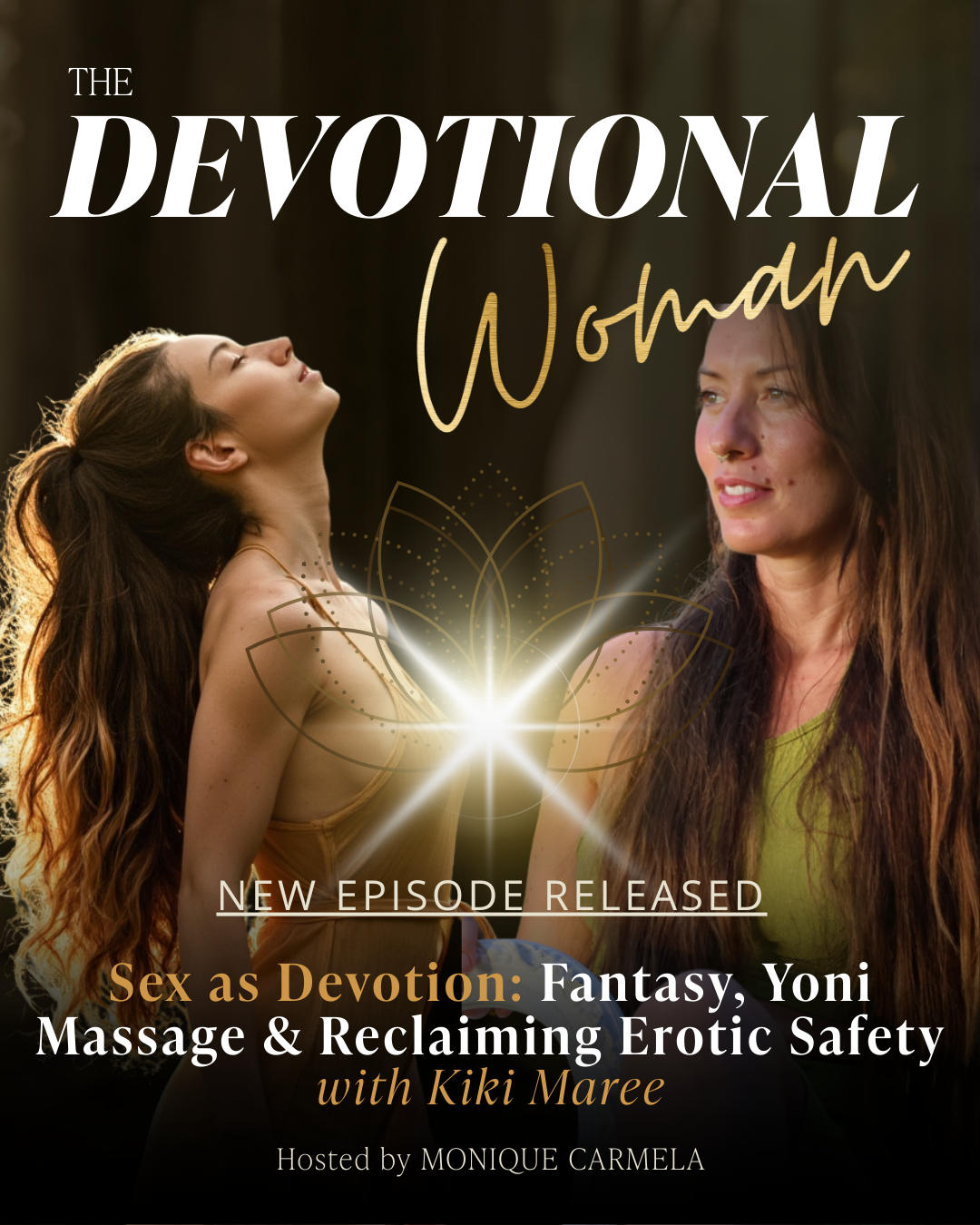
Sexuality as Devotion: Reclaiming Safety, Pleasure & Truth in the Body

For so many women, sexuality hasn’t felt like something nourishing or life-giving.
It has felt confusing. Pressured. Performed. Or simply… disconnected.
And yet, beneath the layers of conditioning, shame, and silence, there is a deeper truth the body holds.
Sexuality was never meant to be something we push through, tolerate, or perform for another.
It was always meant to be something we enter — with presence, safety, and devotion.
In this episode of The Devotional Woman Podcast, I sat down with sexologist and educator Kiki Maree for a deeply honest conversation about sexuality, fantasy, nervous system safety, yoni massage, and what it actually takes to reclaim pleasure as something that is for us.
This blog post weaves together the core themes of that conversation — and invites you into a softer, truer way of relating to your body, intimacy, and desire.
The Legacy We’re Undoing: Sexuality, Shame & Safety
We are not starting from neutral ground when it comes to sex.
We are living inside a legacy where female sexuality has been silenced, demonised, rushed, and made unsafe. Many of us received little to no sex education — or education rooted entirely in fear, disease, and what could go wrong.
We were never taught:
how desire actually works
how the nervous system shapes arousal
how safety, slowness, and consent are foundational for pleasure
So when our bodies don’t respond the way we think they “should,” we assume something is wrong with us.
But nothing is wrong with you.
Your body learned how to protect you in a world that didn’t teach you how to feel safe inside it.
Desire Is Context-Dependent (Not a Character Flaw)
One of the most important reframes in this conversation is understanding that desire and arousal are context-dependent.
They are shaped by:
emotional safety
nervous system regulation
past experiences
cultural messaging
the type of sex we’re having
This is why so many women feel disconnected from desire — not because they’re broken, but because the context has never supported their body to open.
When sex is rushed.
When penetration is expected.
When orgasm becomes the goal.
When pressure replaces presence.
The body closes.
Slowness isn’t a flaw.
It’s the pathway.
Slowing Down Is Vulnerable — and Necessary
Many of us were conditioned to believe we should “just know” how to have sex without being taught. That slowing down, asking questions, or checking in means something is wrong.
But slowing down is where intimacy actually begins.
Slowing down means:
listening to your body
noticing what feels like a yes and what doesn’t
releasing assumptions about what your partner wants
allowing space for truth to emerge
This can feel confronting — especially in long-term relationships where patterns are already established. Which is why the shift doesn’t happen all at once.
It happens in small, honest steps.
Through conversations.
Through pauses.
Through choosing truth over habit.
Devotion isn’t performance.
It’s presence.
Fantasy: A Bridge, Not a Bypass
Fantasy is often misunderstood and shamed — especially for women.
In this conversation, we explored how fantasy can actually be a powerful support, particularly for women who have been socialised to put other people’s pleasure above their own.
Fantasy can:
create psychological safety
help overthinking minds soften
support arousal without forcing sensation
allow exploration without performance
For many, fantasy becomes an access point into feeling — a way out of the head and back into the body.
The key question isn’t “Is fantasy okay?”
It’s “How am I using it?”
When fantasy is used to override discomfort, push through resistance, or tolerate what isn’t truly consensual, the body remembers.
But when fantasy is used with choice, curiosity, and intention — it can be a bridge back to pleasure, not an escape from the body.
When Presence Feels Hard: Listening Instead of Pushing
Many women struggle with presence in intimacy not because they’re “doing it wrong,” but because their body doesn’t yet feel safe enough to stay.
The invitation here isn’t to force presence — but to cultivate safety.
Sometimes that means:
pausing
slowing down
honouring a no
noticing resistance instead of breathing through it
The body doesn’t need to be controlled.
It needs to be listened to.
And when that listening happens, something profound shifts — discomfort softens, sensation deepens, and pleasure becomes available in ways that were never accessible through force.
Yoni Massage: Rebuilding Trust, Voice & Consent
We also spoke about therapeutic yoni massage — not as something erotic or performative, but as a deeply therapeutic, consent-led practice.
This work is about:
reconnecting to the body
rebuilding trust with sensation
learning to voice needs in real time
understanding boundaries through the body
For many women, this is the first time they are asked:
“Is this okay?”
“Would you like me to stay here?”
“Do you want more… or less?”
The ability to say stop, slower, stay, no — without apology — can be profoundly healing.
This isn’t just about sexuality.
It ripples into life.
When the body learns it’s safe to speak, everything changes.
Releasing Performance & Outcome-Based Sex
Maybe your body doesn’t want to squirt.
Maybe orgasm doesn’t always happen.
Maybe penetration isn’t the goal.
And that’s okay.
The real questions are:
Do you feel pleasure?
Do you feel connected?
Do you feel safe to communicate your needs?
Sex isn’t a checklist.
Pleasure isn’t a performance.
Your body isn’t here to prove anything.
When outcomes are released, intimacy becomes something that completes itself — not something that needs to be “finished.”
Sexuality as a Devotional Practice
At its core, this conversation is about reclaiming sexuality as a devotional practice.
Devotion looks like:
presence without agenda
listening without fixing
serving what’s alive in the moment
meeting yourself and your partner where you are
This kind of intimacy is tender.
It’s honest.
And it changes everything — not just in the bedroom, but in how you relate to life.
If something in you knows there’s more — more truth, more safety, more aliveness — trust that knowing.
Your body is not broken.
It’s remembering.
🎧 Listen to the Full Episode
You can listen to the full conversation on The Devotional Woman Podcast, where we explore all of this — and more — in depth.
Links to the episode, resources, and ways to work with me are shared below.